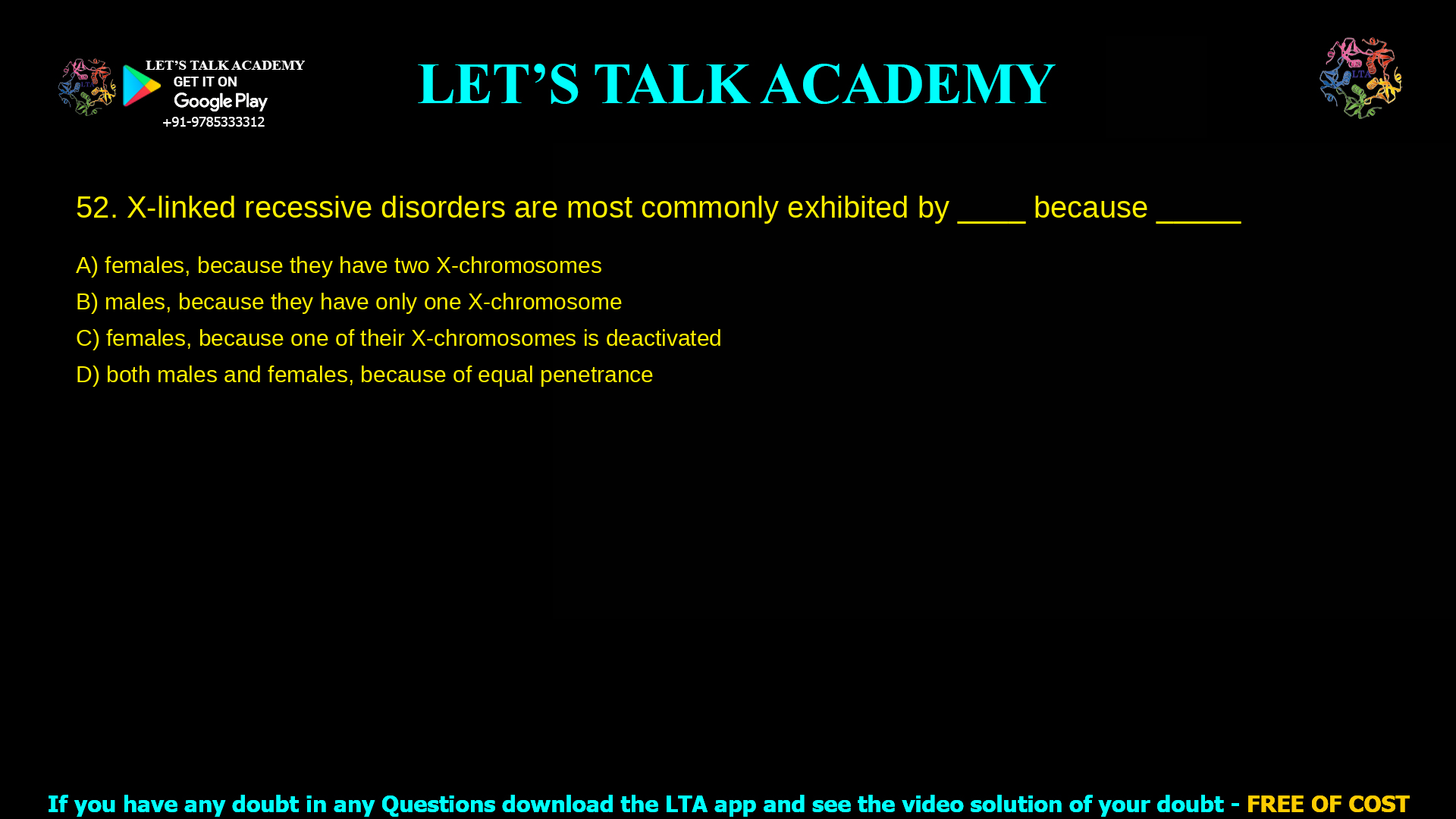
X-linked recessive disorders are most commonly exhibited by —-
because——-
females, because they have two X-chromosomes and are therefore
more likely to inherit one with a disease
males, because they have only one X-chromosome
females, because one of their X-chromosomes is deactivated
both males and females, because of equal penetrance
Why Are X-linked Recessive Disorders Most Commonly Exhibited by Males?
X-linked recessive disorders are genetic conditions caused by mutations in genes located on the X chromosome. These disorders show a distinct pattern of inheritance, primarily affecting males more frequently than females. Understanding why requires a basic grasp of human sex chromosomes and inheritance.
Correct Answer: Males, because they have only one X-chromosome
Males have one X chromosome and one Y chromosome (XY), whereas females have two X chromosomes (XX). Because males possess only one X chromosome, any recessive mutation on that chromosome will manifest as the disease since there is no second X chromosome to potentially carry a normal copy of the gene. Females, having two X chromosomes, would typically need mutations in both copies to express the disorder, which is much rarer.
Explanation of Other Options:
-
Females, because they have two X chromosomes and are therefore more likely to inherit one with a disease
This is not correct. While females do have two X chromosomes, having one affected X chromosome usually makes them carriers, not affected individuals. The second, normal X chromosome often compensates, preventing the disorder from showing symptoms.
-
Females, because one of their X chromosomes is deactivated
Though females undergo a process called X-inactivation where one X chromosome is randomly turned off in cells, this inactivation is usually random and mosaic. This means some cells express the normal gene, reducing the overall impact. Therefore, females are generally protected from recessive disorders unlike males who have no backup X chromosome.
-
Both males and females, because of equal penetrance
Penetrance refers to how often a gene manifests as a trait or disorder when present. X-linked recessive disorders do not have equal penetrance in males and females because of their differing chromosome compositions. Thus, it mainly affects males with more prevalence.
Key Takeaways
-
X-linked recessive disorders predominantly affect males due to their single X chromosome.
-
Females are typically carriers because they possess two X chromosomes, one normal and one mutated.
-
X-inactivation in females offers some protection, preventing widespread disease expression.
-
Understanding this inheritance pattern helps in genetic counseling and disease management.


