Understanding the Reaction of Glyceraldehyde with HIO₄

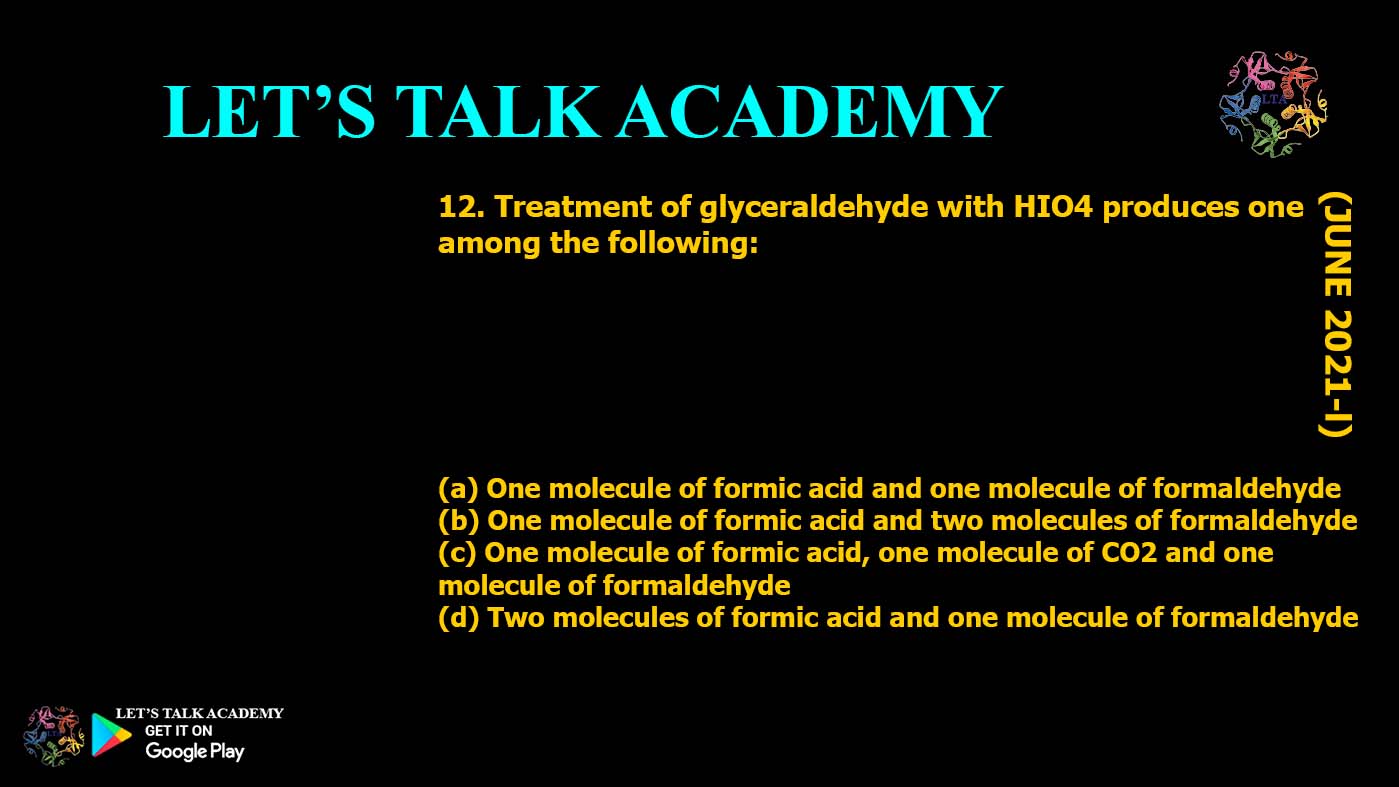
12. Treatment of glyceraldehyde with HIO4 produces one among the following:
(a) One molecule of formic acid and one molecule of formaldehyde
(b) One molecule of formic acid and two molecules of formaldehyde
(c) One molecule of formic acid, one molecule of CO2 and one molecule of formaldehyde
(d) Two molecules of formic acid and one molecule of formaldehyde


Article:

Introduction

The reaction of glyceraldehyde with periodic acid (HIO₄) is a well-known organic chemistry reaction used to cleave carbon-carbon bonds. Understanding how glyceraldehyde interacts with HIO₄ and what products it produces is essential for students and professionals studying organic chemistry. In this article, we will explain the reaction step-by-step and determine the correct products.


The Chemical Reaction:

When glyceraldehyde, a three-carbon sugar, is treated with periodic acid (HIO₄), it undergoes a cleavage reaction. Periodic acid (HIO₄) is a strong oxidizing agent that causes the cleavage of carbon-carbon bonds in sugars, particularly those with adjacent hydroxyl groups. The reaction is typical of glycol cleavage, where the hydroxyl groups of adjacent carbons are oxidized.


Mechanism of the Reaction:

  1. Oxidation of the hydroxyl groups: The reaction begins with periodic acid (HIO₄) oxidizing the vicinal diol (adjacent hydroxyl groups) on the glyceraldehyde molecule. This oxidation leads to the breaking of the C-C bond between the two carbons that originally held the hydroxyl groups.

  2. Cleavage of the C-C bond: After oxidation, the C-C bond between the carbons is cleaved, resulting in two smaller molecules, each containing one of the products. In the case of glyceraldehyde, this cleavage results in the formation of formic acid (HCOOH) and formaldehyde (CH₂O).


What are the Products?

The result of this reaction is the formation of two products:

  • Formic acid (HCOOH), a one-carbon carboxylic acid.

  • Formaldehyde (CH₂O), a one-carbon aldehyde.


The Correct Answer:

Based on the mechanism described, the correct product combination when glyceraldehyde reacts with periodic acid (HIO₄) is:

  • One molecule of formic acid (HCOOH) and one molecule of formaldehyde (CH₂O).

Thus, the correct answer to the question is:

(a) One molecule of formic acid and one molecule of formaldehyde.


Conclusion:

The reaction of glyceraldehyde with periodic acid (HIO₄) results in the cleavage of the carbon-carbon bond between adjacent hydroxyl groups, forming formic acid and formaldehyde. Understanding the mechanism of this reaction is important for those studying glycolysis, carbohydrate chemistry, and organic oxidation reactions. The reaction is an excellent example of how specific reagents can induce bond cleavage and generate smaller, useful molecules in organic chemistry.

3 Comments
  • Akshay mahawar
    April 24, 2025

    Done 👍

  • Vaidehi Sharma
    April 30, 2025

    👍👍

  • yogesh sharma
    May 8, 2025

    Done sir ✅

Leave a Reply

Your email address will not be published. Required fields are marked *

Latest Courses